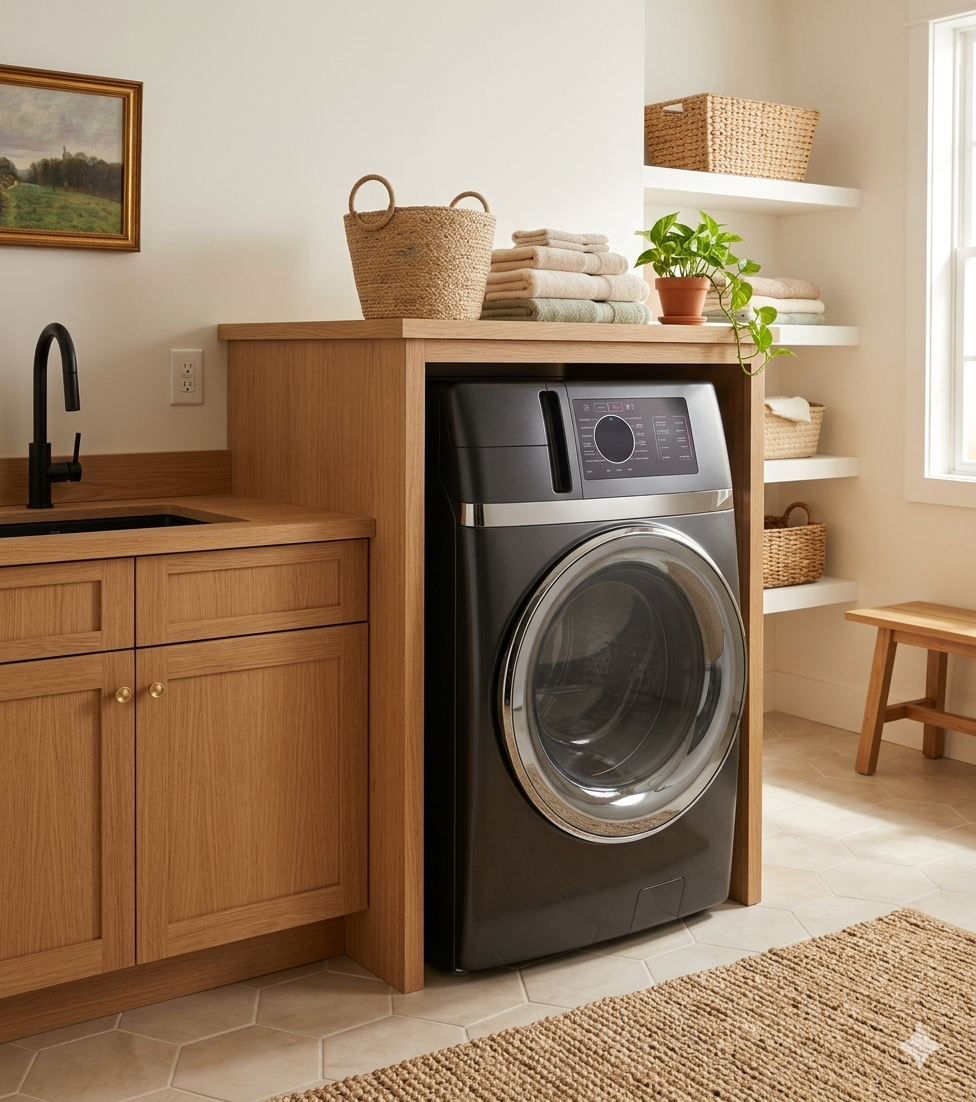
The guide
There are three real types of washer and dryer setups for most homes. They suit different lives, different spaces, and different budgets. This is the plain-English breakdown — pros, cons, and which one we'd recommend for your situation. We rent all three, so we're not trying to talk you into any of them.
If you have a real laundry room, get a top-load pair — cheapest, fastest cycles, easiest to use. If you live in an apartment with stacked machines or a tight closet, get a front-load pair — uses less water, drum is larger, and it stacks. If you don't have a dryer vent (common in condos, ADUs, and older units), the only option is an all-in-one ventless.
We rent all three from $75–$85/month, all-inclusive — delivery, install, and service.
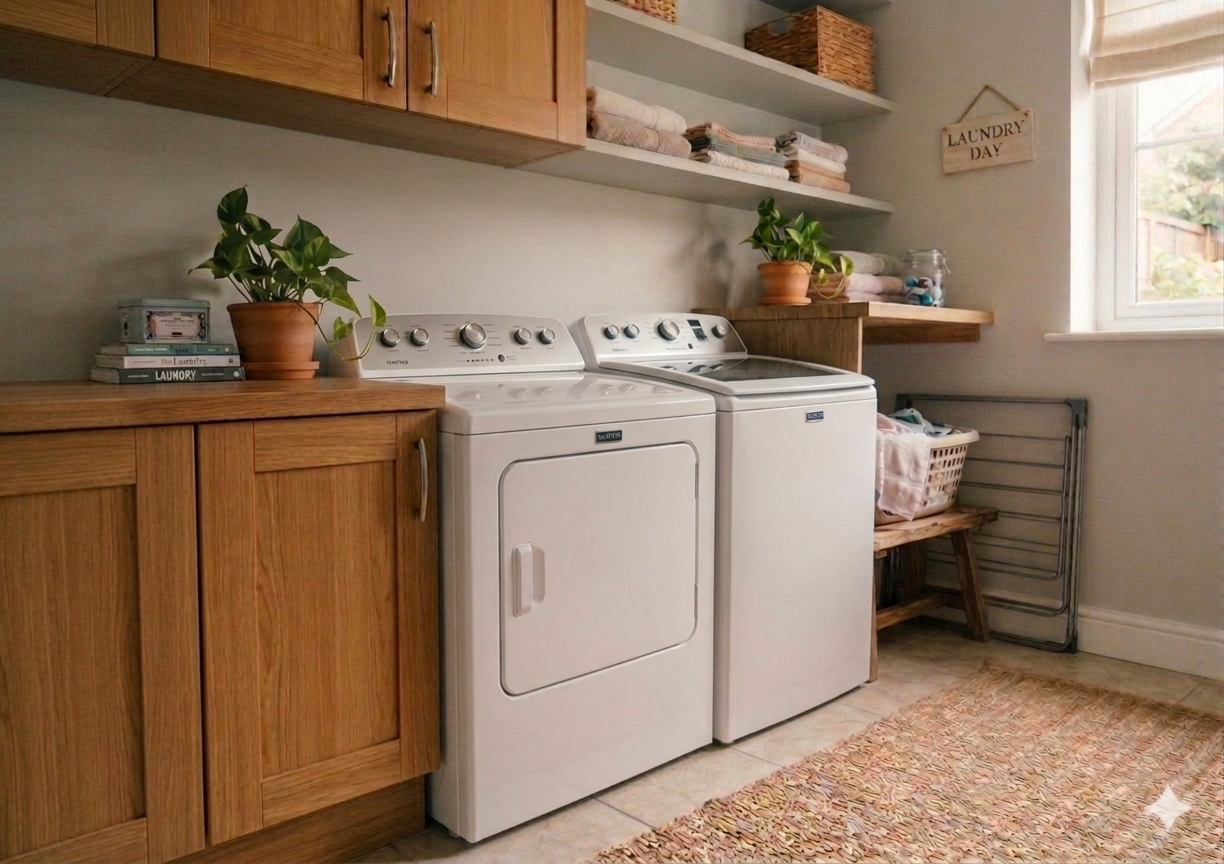
Top-load washer + dryer
Best for: Houses and townhomes with a real laundry room, families doing heavy loads, anyone who wants the simplest machine and doesn't mind the floor space.
Maybe not for: Apartments with stacked closets, water-conscious renters, anyone who needs the smallest possible footprint.
What we rent it for: $75/mo all-in.
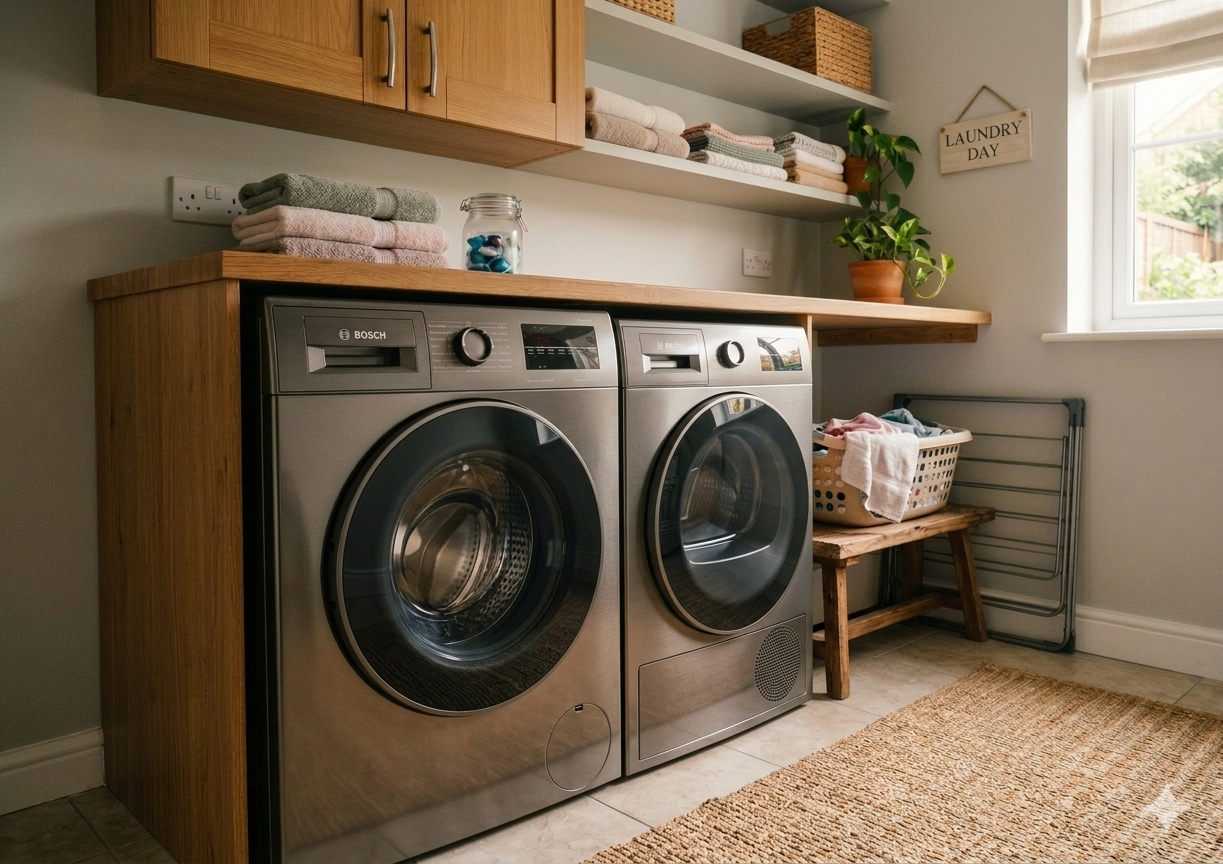
Front-load washer + dryer
Best for: Renters watching the water bill, apartment dwellers who need to stack a pair, anyone with delicate wardrobes, larger loads.
Maybe not for: People who need a 30-minute cycle for kids' uniforms, anyone who hates bending down to load.
What we rent it for: $80/mo all-in.
All-in-one ventless washer/dryer
Best for: Apartments and condos without a dryer vent, ADUs, beach rentals, anyone replacing a non-functional laundry closet with the smallest possible setup.
Maybe not for: Big families with high laundry volume, anyone who wants the fluffiest towels possible.
What we rent it for: $85/mo all-in.
A Long Beach laundromat costs about $8–$12 per wash-and-dry run, twice a week. That's $70–$100 a month, plus the gas, plus the hours of your life. Any of the three types above starts at $75/month, flat — and we deliver it to your door. The math stops making sense pretty quickly.
See washer & dryer rentals →Frequently asked
Neither is 'better' — they're built for different lives. Front-load uses less water, fits in less space, and is gentler on clothes. Top-load is faster, cheaper, and easier to load. Renters with stacked closets or high water bills usually pick front-load; families with a dedicated laundry room usually pick top-load.
If you'd otherwise be going to a laundromat because your unit doesn't have a vent or 220V outlet — yes, absolutely. The all-in-one is what makes laundry possible in apartments where it wasn't before. If you have a real laundry space, a separate washer and dryer pair will dry faster and handle bigger loads.
Top-load washers and electric dryers typically run 10–15 years with basic maintenance. Front-load washers usually last 8–12 (the door seal and bearings are the wear items). All-in-one units run 7–10. As a renter, the lifespan doesn't matter to you — we maintain the unit and swap it free for the life of the rental.
Gas dryers cost a little more upfront but run cheaper per load (gas is usually cheaper than electricity per BTU). They also dry faster. Electric dryers are easier to install — no gas hookup required — and slightly safer. If you have a gas hookup in place, use it. If not, electric is fine.
Correct. Standard dryers blow hot, humid air out through a 4-inch vent to the outside. All-in-ones use a condensing drying system — they cool the humid air and drain the water out through the same drain line as the washer. No hole in the wall required.
Long Beach has moderately hard water. Front-loaders use less water but can build up scale on the drum and seal — descale a couple times a year and you're fine. Top-loaders are more tolerant of hard water in general. If you rent from us, descaling and maintenance is on us.
Send a photo of where the unit will sit and a few details about how much laundry you do. I'll tell you which type fits — straight answer, no upsell. If we don't rent it, I'll tell you that too.